Overview
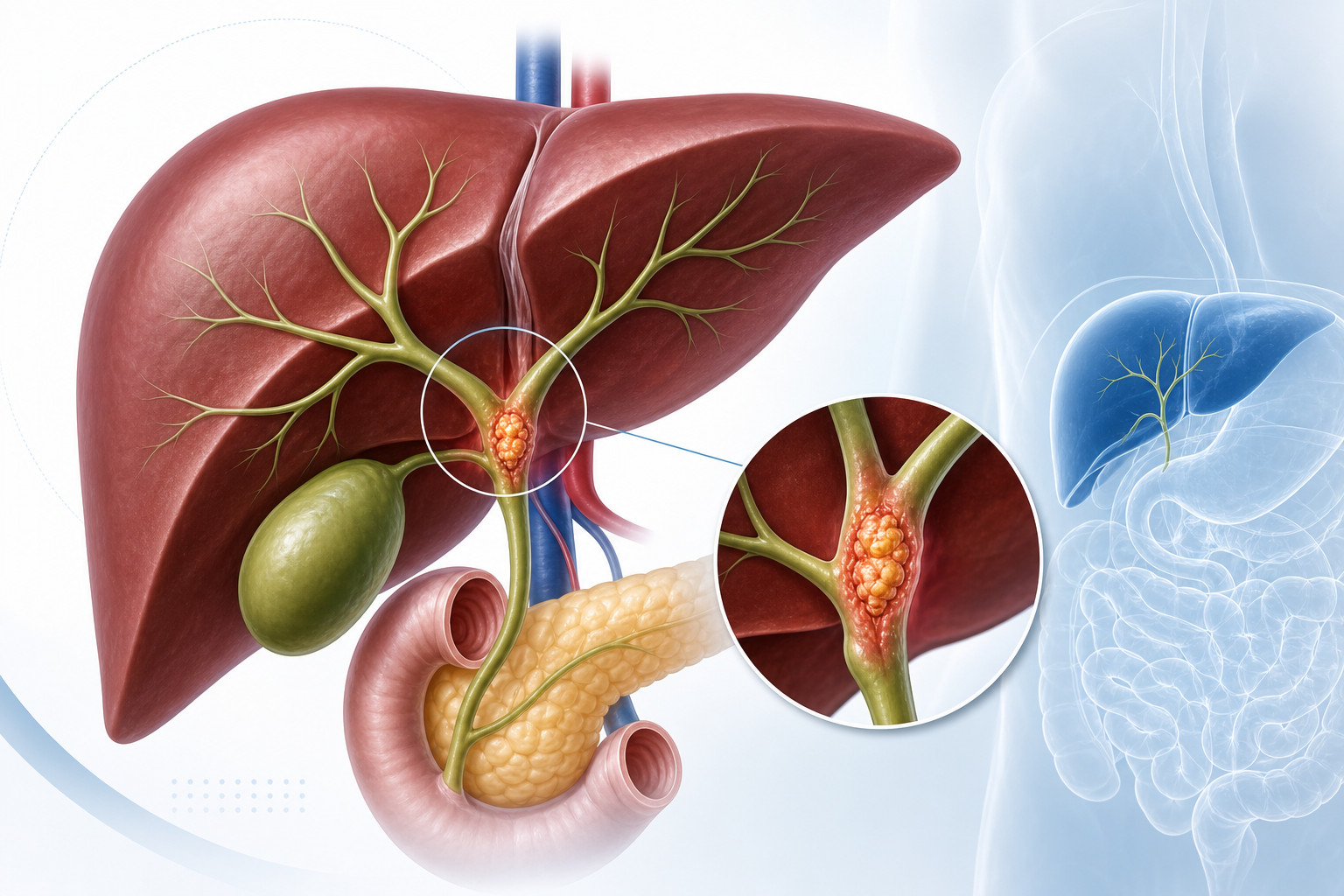
Cholangiocarcinoma may arise inside the liver or in bile ducts outside the liver. Because bile flow can become blocked as the disease grows,
some people first notice jaundice, while others discover it during evaluation for abdominal symptoms or abnormal liver tests.
Causes and Risk Factors
In many patients, a single direct cause is not identified. Risk may be higher in people with long-term bile duct inflammation, selected liver and
biliary disorders, chronic infections in endemic regions, or longstanding liver injury. Family history and prior imaging findings may also guide risk review.
Symptoms
Common warning signs can include yellowing of the eyes or skin, dark urine, pale stool, persistent itching, upper abdominal discomfort,
poor appetite, unintended weight loss, and ongoing fatigue. Any progressive or unexplained symptom should be reviewed promptly.
Evaluation and Diagnosis
Evaluation usually combines clinical examination, blood investigations, and imaging such as ultrasound, contrast CT, MRI, or MRCP.
Endoscopic procedures may be used to relieve obstruction and obtain tissue when needed. Diagnosis and staging together help define a practical treatment plan.
Treatment Approach
Treatment is individualized based on tumor location, stage, overall fitness, and bile duct function. Depending on findings, options may include surgery,
endoscopic or radiologic drainage procedures, systemic therapy, and coordinated supportive care. Decisions are made after discussing expected goals and risks.
Recovery and Follow-up
Follow-up focuses on wound and nutritional recovery, symptom control, liver function monitoring, and interval imaging when advised.
A structured review schedule supports early detection of concerns, treatment response tracking, and clear communication with patients and caregivers.