Overview
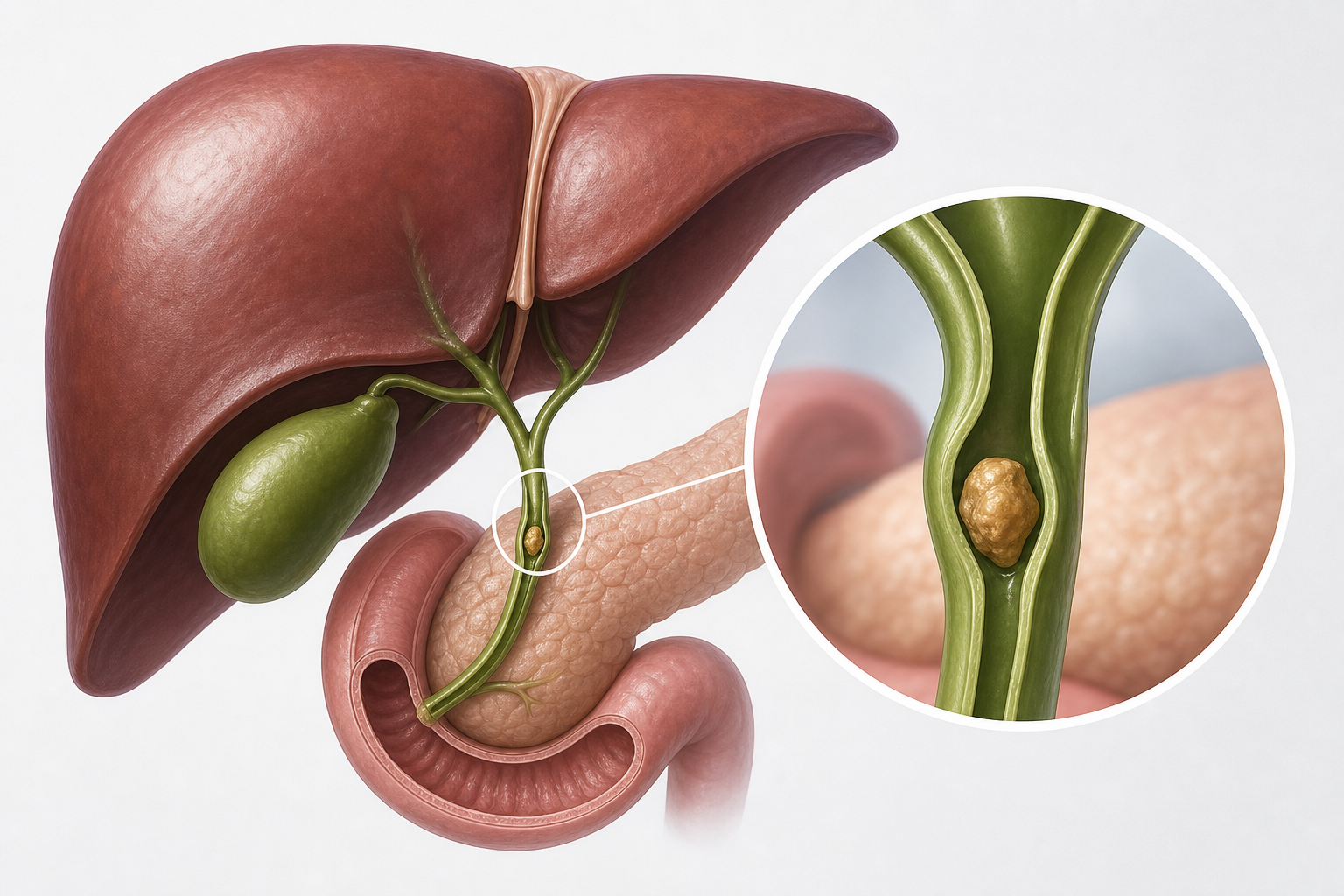
Most bile duct stones form in the gallbladder and then move into the common bile duct. Even a small stone can block drainage and lead to pain, fever, jaundice, or inflammation of the pancreas. Because the condition may worsen quickly in some patients, clear diagnosis and stepwise treatment planning are important.
Causes and Risk Factors
Common contributors include gallstones, prior episodes of biliary colic, and age-related changes in bile composition. Some people are at higher risk if they have repeated gallbladder inflammation, previous bile-duct interventions, or metabolic factors that promote stone formation. A personalized history helps identify which risk factors are most relevant in each case.
Symptoms
Symptoms may include upper abdominal pain, nausea, vomiting, yellowing of the eyes or skin, dark urine, pale stool, itching, or fever with chills. Some patients have only mild or intermittent discomfort, while others present with urgent infection. Any combination of jaundice and fever requires prompt medical review.
Evaluation and Diagnosis
Assessment usually combines clinical examination, liver-function blood tests, and imaging such as ultrasound or cross-sectional scans when needed. The goal is to confirm duct obstruction, estimate severity, and look for complications. This structured evaluation supports safer decisions about timing and type of intervention.
Treatment Approach
Treatment is tailored to symptoms, infection risk, and imaging findings. In many patients, endoscopic stone clearance is considered first to restore bile flow, followed by management of the gallbladder when appropriate. If infection or severe inflammation is present, stabilization and urgent decompression are prioritized before definitive planning.
Recovery and Follow-up
Recovery depends on the procedure performed and whether complications were present at diagnosis. Follow-up typically focuses on symptom resolution, repeat liver tests when indicated, wound or post-procedure review, and prevention of recurrent stones. Patients are advised to return early if pain, fever, jaundice, or vomiting recurs.