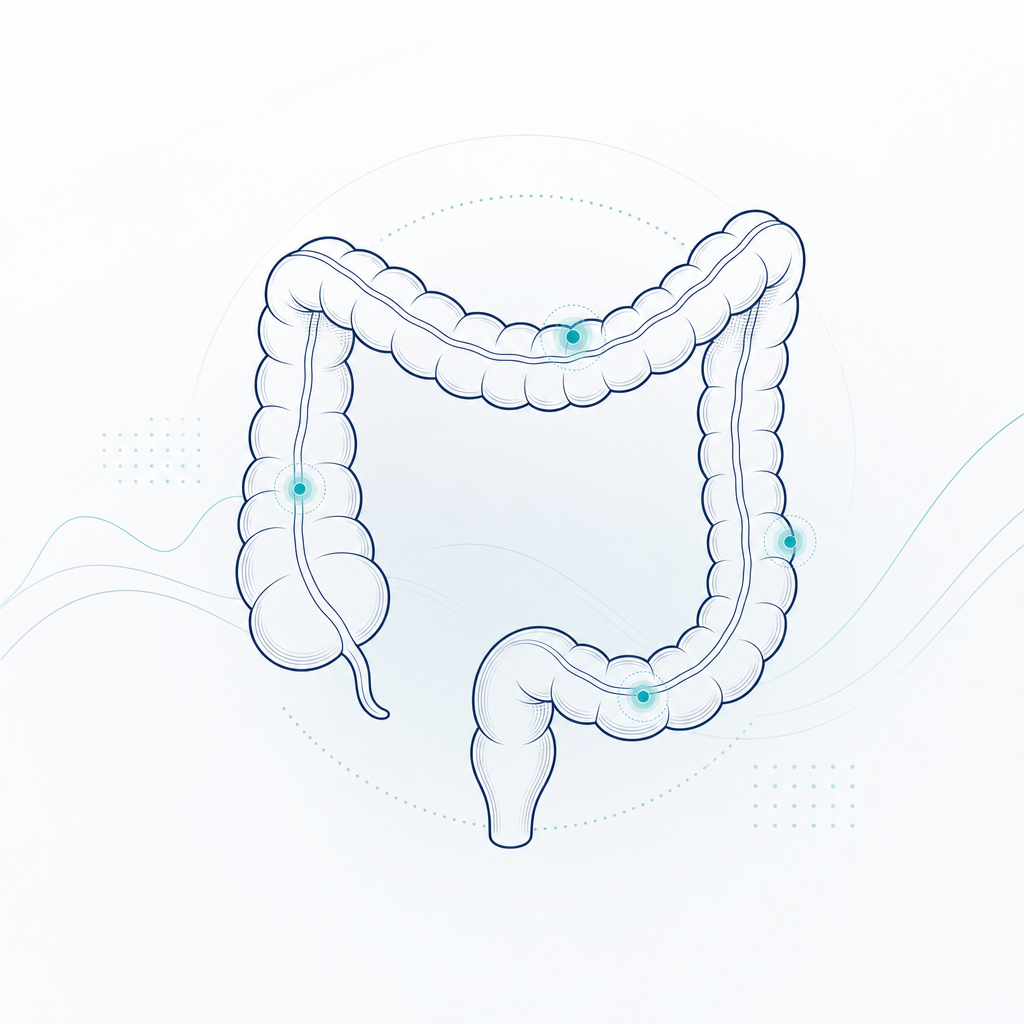
Colonic TB
Colonic tuberculosis is an infection-related inflammation affecting part of the large intestine.
- Persistent abdominal discomfort or cramping
- Change in bowel habit that does not settle
- Unexplained weakness, appetite loss, or weight drop
Why evaluation matters: Early assessment helps confirm the diagnosis and avoid delay in targeted treatment.
Intestinal Obstructions
Intestinal obstruction means bowel contents are partly or fully blocked from passing normally.
- Abdominal swelling with pain that may come in waves
- Nausea or vomiting, especially with poor oral tolerance
- Difficulty passing stool or gas
Why evaluation matters: Timely review helps prevent dehydration and identifies whether urgent care is needed.
Diverticulitis
Diverticulitis is inflammation of small pouches in the colon wall, often causing localized pain.
- Persistent lower abdominal pain, often on one side
- Fever, bloating, or tenderness
- Constipation or diarrhea that feels new for you
Why evaluation matters: Proper diagnosis guides safe treatment and helps reduce risk of recurrent attacks.
Colonic Cancer
Colonic cancer develops from abnormal growth in the colon and benefits from early detection.
- Blood in stool or unexplained change in bowel pattern
- Persistent fatigue or unexplained weight loss
- Abdominal discomfort that does not improve
Why evaluation matters: Clinical review can clarify cause, support staging if required, and inform next treatment steps.