
Gallbladder care

Gallbladder Stone

Understand gallbladder stone disease and related gallbladder concerns with clear, patient-friendly guidance to help you choose the right next step.

Patient-first consultation with compassionate surgical clarity.
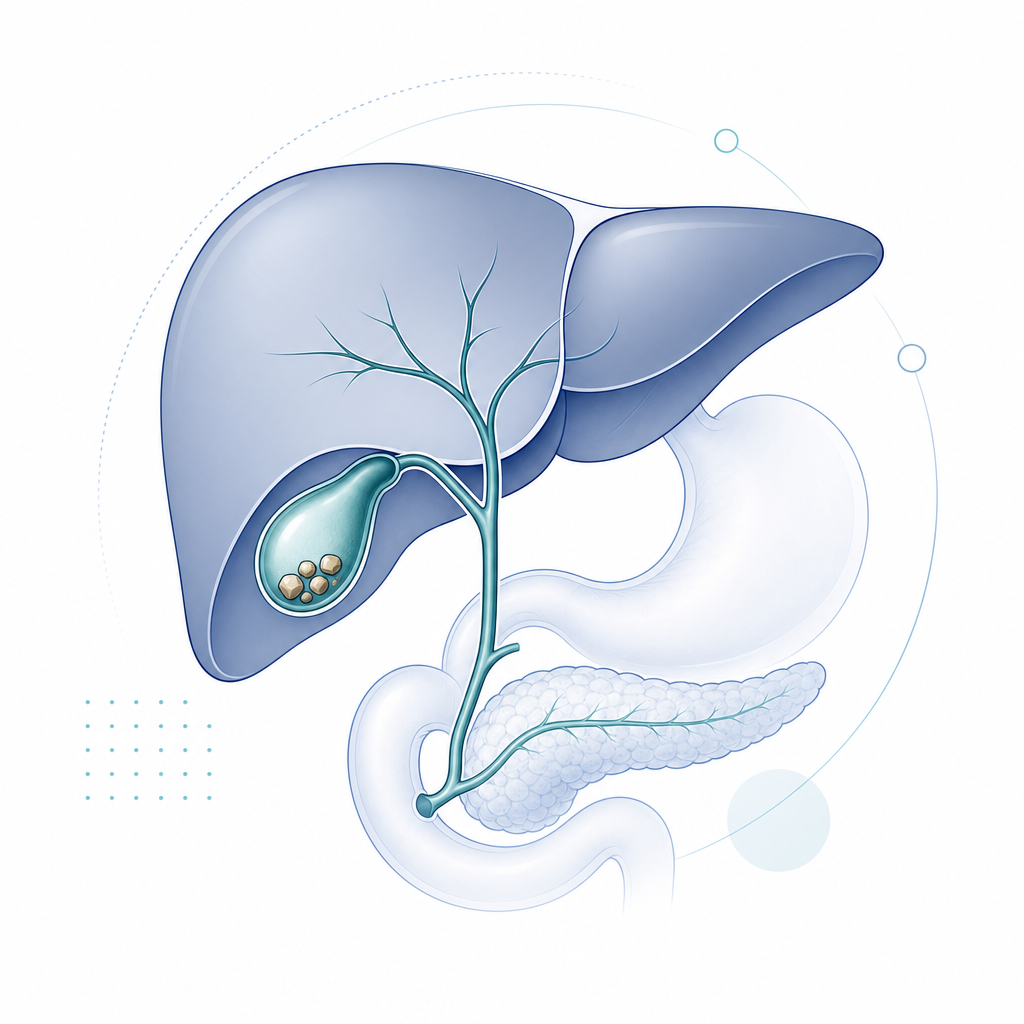
Minimal medical illustration of the upper digestive system showing liver, gallbladder, and bile duct pathway with subtle highlight markers
Educational visual for orientation only; detailed diagnosis and treatment planning are individualized during consultation.

Patient Information

Gallbladder Stone (Cholelithiasis): What Patients Should Know

A quick, practical overview to help you recognize symptoms, understand evaluation, and decide when to seek consultation.

Symptoms

  • Pain or heaviness in the right upper abdomen, often after oily or heavy meals.
  • Nausea, bloating, or repeated indigestion-like discomfort.
  • Pain episodes that may spread to the back or right shoulder.
  • Some patients have no symptoms and stones are found incidentally on imaging.

Diagnosis

  • Clinical review of pain pattern, meal relation, and prior episodes.
  • Ultrasonography is commonly the first imaging test to detect gallbladder stones.
  • Blood tests may be advised to assess infection, inflammation, or biliary obstruction when indicated.
  • Further imaging can be considered if symptoms suggest ductal involvement or complications.

Treatment

  • Observation may be appropriate in selected asymptomatic cases after specialist assessment.
  • Symptomatic recurrent stones are commonly treated with gallbladder removal surgery when clinically suitable.
  • Laparoscopic (keyhole) surgery is often preferred where appropriate due to faster recovery in many patients.
  • Treatment choice is individualized based on symptoms, imaging findings, overall health, and risk profile.

When to consult

  • Repeated right upper abdominal pain, especially after meals.
  • Persistent nausea, vomiting, fever, or worsening abdominal tenderness.
  • Jaundice (yellow eyes/skin), dark urine, or pale stool with abdominal symptoms.
  • If an ultrasound already reports stones or polyp and you need treatment planning guidance.

Photo placeholder

Video link placeholder