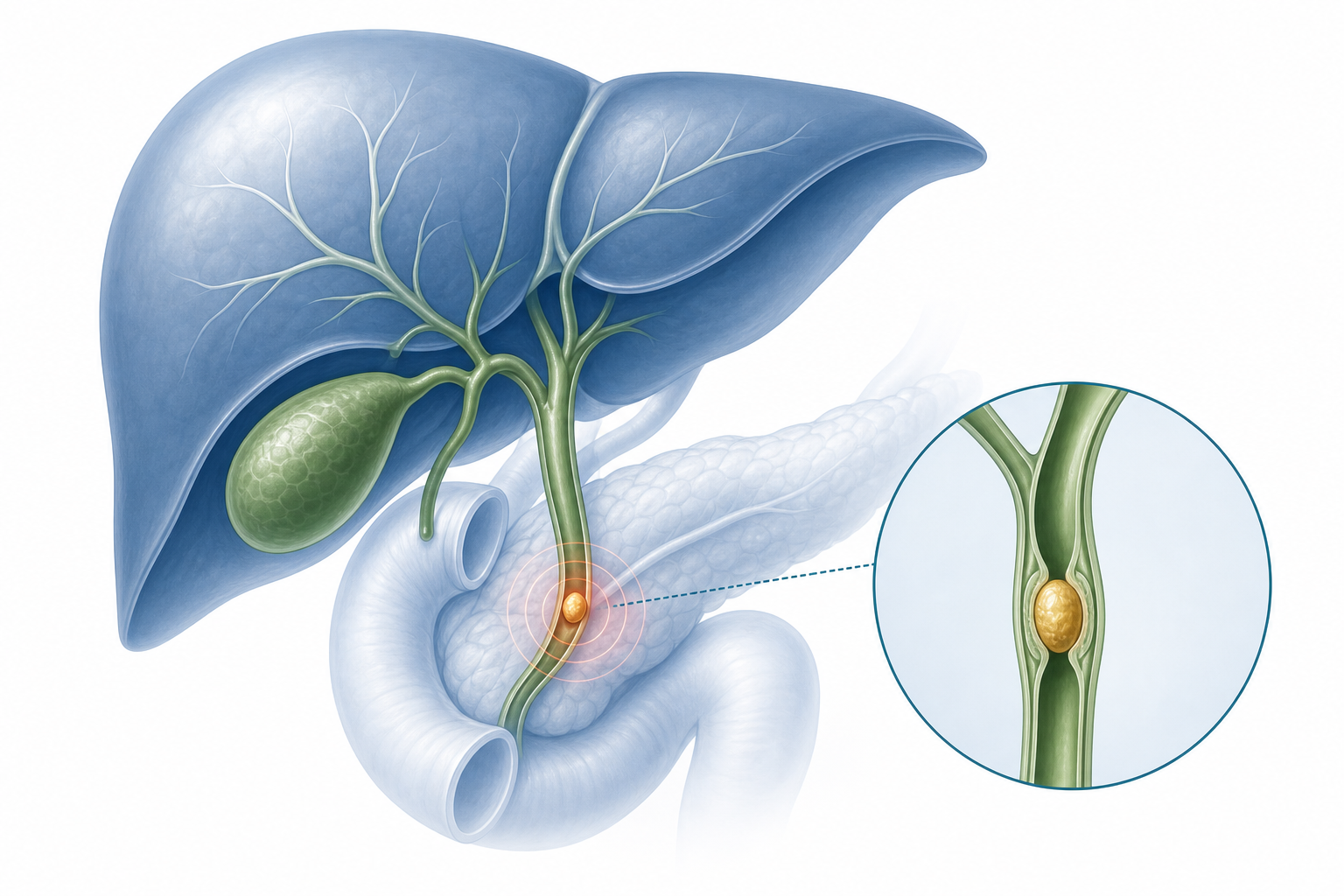
Overview
In obstructive jaundice, bile drainage is blocked somewhere along the bile ducts. The condition is a sign of an underlying problem rather than a diagnosis by itself. Because prolonged obstruction can affect liver function and overall health, timely specialist assessment is important.
Causes and Risk Factors
Common causes include bile duct stones, benign strictures, inflammation, pancreatic or biliary masses, and postoperative narrowing of ducts. Risk may increase with a history of gallstone disease, prior biliary interventions, recurrent pancreatitis, or age-related biliary disorders.
Symptoms
Patients may notice yellowing of skin or eyes, dark urine, pale stools, generalized itching, bloating, nausea, or upper abdominal discomfort. Fever, chills, persistent vomiting, confusion, or severe pain are warning signs that require urgent medical attention.
Evaluation and Diagnosis
Evaluation usually starts with focused history, physical examination, and blood tests for bilirubin and liver function. Imaging may include ultrasonography and cross-sectional scans to define the level and likely cause of blockage. Endoscopic or specialized biliary studies are considered when intervention planning is needed.
Treatment Approach
Treatment is tailored to the underlying cause and clinical condition. The immediate goal is to relieve obstruction and control infection risk when present. Depending on findings, management may involve endoscopic drainage, stenting, image-guided procedures, planned surgery, and coordinated perioperative care.
Recovery and Follow-up
Recovery depends on cause, timing of intervention, and overall health status. Follow-up typically tracks symptom improvement, liver test normalization, nutrition, and wound or stent-related care if applicable. Ongoing reviews help reduce recurrence risk and support long-term hepatobiliary health.