
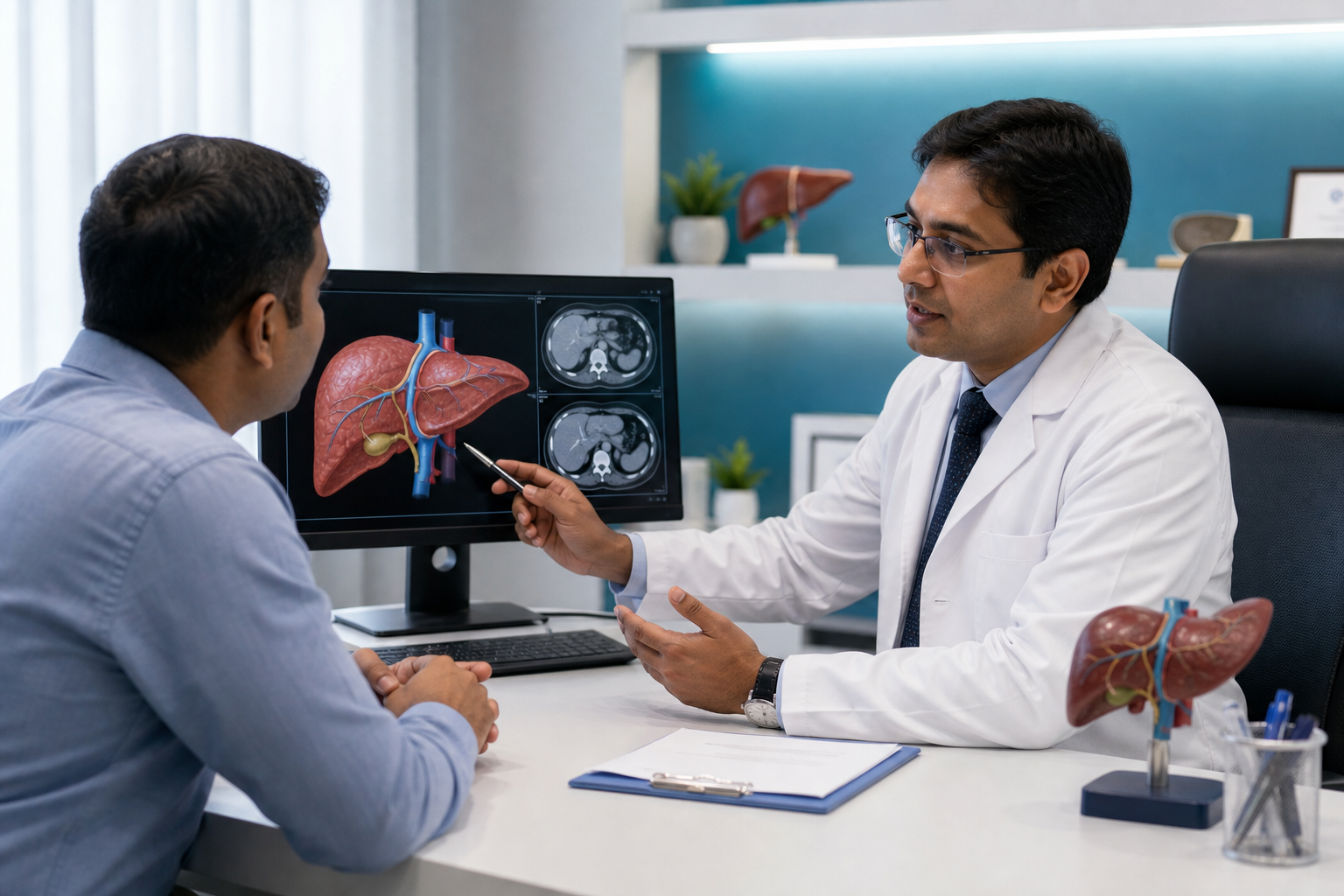
Overview
Liver hemangioma is usually a slow-growing vascular lesion and often does not require immediate intervention. In most cases, it is monitored when stable and asymptomatic. The main clinical goal is to confirm diagnosis accurately and ensure it is distinguished from other liver lesions that may need different treatment.
Causes and Risk Factors
The exact cause is not always clear. Hemangiomas are often considered congenital vascular malformations, meaning they may be present for years before detection. They are frequently found incidentally in adults during ultrasound, CT, or MRI. A structured clinical review helps identify whether symptoms are likely related to the lesion or to another digestive condition.
Symptoms
Many patients have no symptoms. When symptoms occur, they may include upper abdominal discomfort, fullness after meals, or vague right-sided abdominal heaviness. Because these complaints are non-specific, medical assessment is important to avoid self-diagnosis and to confirm whether the hemangioma is truly the source of symptoms.
Evaluation and Diagnosis
Evaluation usually starts with history, physical examination, and review of prior reports. Imaging is central to diagnosis, with contrast-enhanced studies often helping define lesion characteristics. Follow-up imaging intervals may be advised in selected cases to document stability over time and support safe, evidence-based decision-making.
Treatment Approach
Most hemangiomas are managed conservatively with observation when they are small, typical on imaging, and not causing significant symptoms. Active treatment is considered selectively—for example, in persistent symptom cases, uncertain diagnosis after imaging, or specific clinical scenarios where specialist intervention is appropriate. Management is individualized after surgical consultation.
Recovery and Follow-up
For patients on observation plans, follow-up focuses on symptom review and interval imaging when indicated. If a procedure is advised, recovery guidance includes pain control, activity planning, and scheduled review visits. Ongoing follow-up ensures treatment response, reassesses liver health, and supports timely escalation if symptoms change.
Video Consultation Resource
Prefer a remote first discussion? Request a video consultation pathway to review reports, understand next steps, and plan in-person care only when required.
Open Video Consultation & Chamber Options